Before I start this post we must say that this blog has been written by Veronica for us, we have changed some of the words but on the whole she has written it. She has also taken most of the photos as she loves doing things like that – so thank you Veronica. For those on Facebook she has also done daily updates where possible, this probably wont carry on when she leaves us in a few days but we will try to do some.
Friday 27th march
After some planning the night before we set off to the Cultural Centre. it was very educational and after walking around and reading all the warnings we made the decision to not climb the rock. I must admit this has been a real ethical issue. After hearing more about the aboriginal culture and understanding their concerns it is hard to completely go against their requests and then explain this to the children. Luckily this decision was actually made earlier by the fact that the rock has been closed for climbing for the last two days due to high winds. Uluru- Kata Tjuta National Park expands across more than 327,414 acres of Australian desert and is owned by the Anangu people and leased by the Australian government. The lease is for 100 years and we are 33years into the lease.


We headed back into town to learn to play the didgeridoo. Bob refused to participate but Mick and Sam gave it a go. By the end Sam managed to get a sound. The didgeridoo is not allowed to be played by women. The explanation for this was that when men play the didgeridoo it vibrates their Adam’s apple and because women don’t have this they believe that it would vibrate the ovaries and cause difficulty with reproduction.

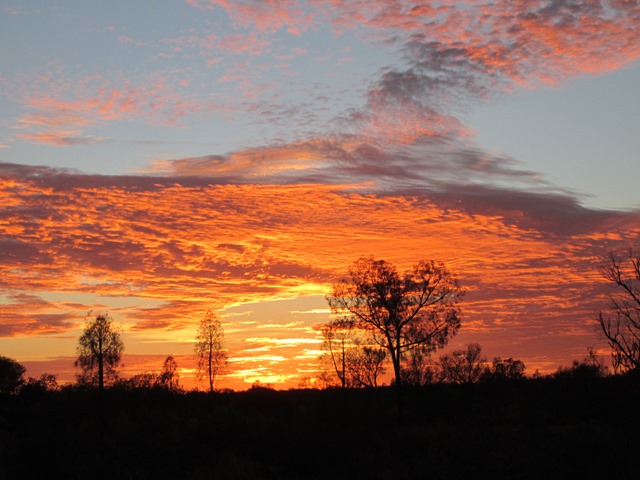
After that we went to a yarning cycle where an aboriginal man shared some local stories. Lunch and a short break where the kids had a swim then back into town to watch the music and dance demonstration. This was an audience participation activity and the men performed a Kangaroo dance and the women were elegant emu’s. We all got involved and Mick and Bob were little naughty and robust Kangaroo’s. A drive back to Uluru to watch the sunset. It is beautiful to see the changing colours on the rock as the sun goes down.


Saturday 28th March
We got up early this morning to watch the sunrise on Uluru. It was slightly cloud this morning and the clouds gave a lot more variation to the colour on the rock. There were some beautiful purple shades this morning particularly on the Olga’s which we could see in the distance. Breakfast was in the car at the base of Uluru. The wind was very strong and so the climb was shut again not that we were concerned as we had already decided not to climb.

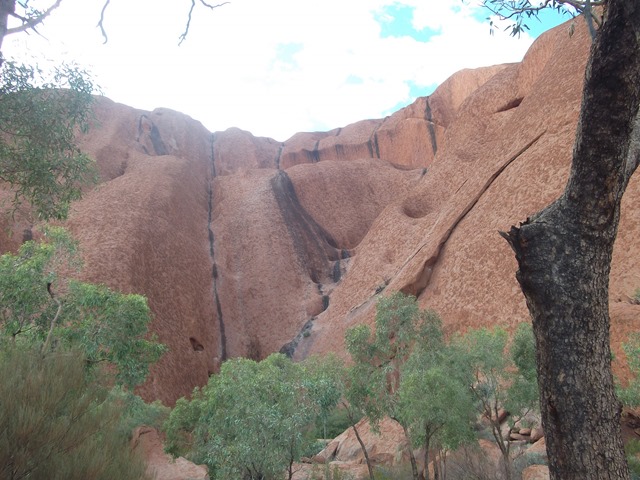
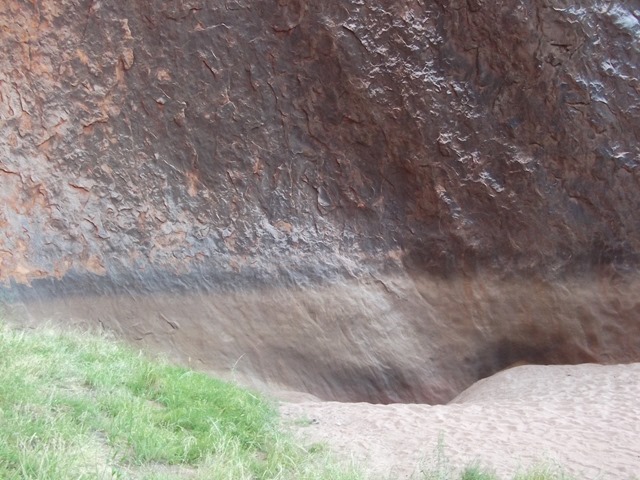 These three pictures show the how the shape of the rock has created by water and the last one shows where the water sits at the base of the rock and is metres deep.
Tour with the ranger at the base of Uluru. It has been very lovely to come across Aboriginal people who are activity trying to promote the positive side of their culture. This trip has made it clear that the issues of merging “black” and “white” Australia together is a very difficult one, that still has many issues that need to be resolved. The aboriginal culture is both very simple but with massive complexity the more you learn. There is a very strong connection to the land and the culture lives very much in the natural environment. The landscape is harsh and vast and seeing it in person gives you a new respect for the Anangu (who are the local aboriginal people) and their ability to have survived in the desert of Australia for so many years. Uluru is 3.6km long and 348m at its tallest point. What we can see of Uluru is just the tip as the rock continues below ground for possibly 5-6km.


A sausage sizzle in the desert with the Olga’s in the background and a whole heap of flies was lots of fun. The fly nets were a good investment but they did provide a rather hazy view. At one stage Veronica took hers off and was chatting away until a fly flew right into her mouth and continued down her throat. This did cause her to stop talking for a short while!!!!
We did the two walks around Katu Tjuta (Olga’s). The first one being Walpa Gorge and then the Valley of the Wind. Katu Tjuta consists of 36 dome rocks clustered together and the meaning of the word is “many heads”. The highest one is 546m above the plain (198m higher then Uluru). It is interested as from a distance Uluru and the Olga’s look smooth but up close the rocks are very textured. There are caves, water marks, rib like features, rough flaky rock, valleys and holes. The aboriginal people have many stories about how Kuta Tjuta was formed but many are sacred and not shared. Geologists believe that Kuta Tjuta was actually one slab with vertical fault lines. Weathering, water and erosion over many millions of years caused the rocks to eventually crack and break away leaving just the separate domes.